Independent community site. Not affiliated with the City or any campaign.
Nanaimo Vote is an independent, non-partisan, community-run site intended to promote citizen
engagement. We are not affiliated with the City, any candidate or campaign.
Independent community site. Not an official City of
Nanaimo website.
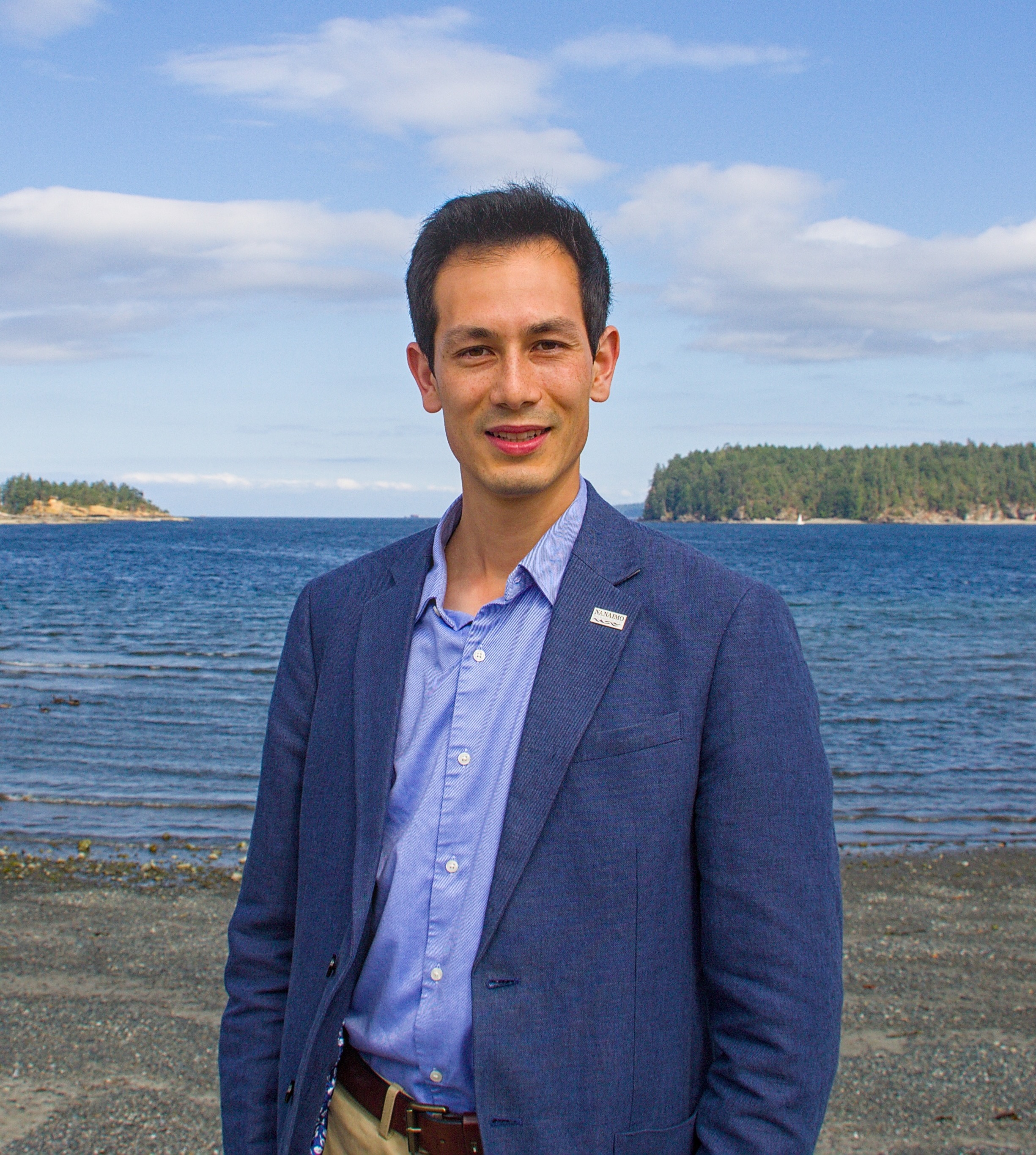
Candidate for City Council
Matthew P Miller
Candidate statement
“Every community decision this council makes should be measured against how it improves access to healthcare and supports the essential workers who deliver it.”
When I began my career in front-line healthcare, I was drawn to Nanaimo by the mid-island lifestyle, employment opportunities, and the natural beauty of the region. It is a story shared by many who call Nanaimo home: families relocating from the mainland to raise their children; young adults building a life and dreaming of owning a home; retirees seeking the idyllic climate on the West Coast. Over the last several years, working with patients of all backgrounds at our regional hospital gave me a window into the needs of a whole community, a community that deserves to live in a city its residents are proud to call home.
Alongside my position with Island Health, I serve as a regional director with the Health Sciences Association of BC, representing over 2,300 healthcare and social service workers on Vancouver Island. In the community, I volunteer with several non-profit organizations, notably Legion 256. I enjoy supporting a variety of their causes, such as raising funds for medical equipment and employee wellness initiatives at the regional hospital. I am also an active member of the Rock City Neighbourhood Association and l'Association des Francophones de Nanaimo.
What is your approach to affordability and growth?
How Nanaimo can manage growth while addressing the cost of living, housing costs, and the infrastructure and services needed by current and future residents.
"I oppose general property tax levy increases above the level of Statistics Canada national CPI of the previous year. Most workers and seniors in Nanaimo do not receive annual raises in the range of three percent, and recent increases are unsustainable for young families and for people on fixed-income pensions. When public sector contracts are in the realm of only three percent a year, serious questions must be asked of our elected officials who regularly approve budgets that appear simply out of touch with the average person. Council's obligation is to work within its means and to find innovative ways to close budget gaps, rather than to push the shortfall onto the residential tax base.
The 2026 annual operating budget for Nanaimo is over 225 million dollars, with a project budget of over 90 million for the same time period. During the next Council term, councillors should take an active approach when decisions are made, discerning the essential infrastructure upgrades from the optional beautification projects that serve largely as media events for those privileged few to cut a red ribbon. It is certainly difficult to offer a dissenting opinion on Council when public pressure mounts, but that is the weight of responsibility for accountable civic governance."
How should the City manage its budget and property taxes?
The City's annual budget and five-year financial plan, property tax increases, spending priorities and efficiency, reserves and debt, and how residents can see the value they get for their tax dollars.
No statement found
This does not mean the candidate has never made a statement. It means Nanaimo Vote has not found one for this specific issue, or the candidate has not provided one in response to it.
What role should local government play in health care infrastructure and access?
Hospital and health-service capacity, facilities and access, including municipal and regional advocacy and partnerships with health authorities and the Province.
"While healthcare delivery is a provincial responsibility, neighbouring land use, area zoning, street parking, and direct political pressure lie at the feet of the municipality.
Council has more leverage on this critical file than it has utilized in the past, and I plan to work with other councillors to build a united front that can champion this vital service that everyone in our region depends on.
The commitments below are the ones a city council can credibly keep in a four-year term.
Study and implement a municipally run primary care clinic based on the Colwood Clinic model. Colwood's clinic operates with salaried physicians delivering care to patients previously without a family doctor. Other Canadian cities have moved into primary care delivery when the Province has been too slow to act, and the City of Colwood is just one example on Vancouver Island.
The clinic model is not the only option worth considering. A year of serious work should also examine contracting through a non-profit operator, partnering with organizations such as the Nanaimo Division of Family Practice and the Nanaimo and District Hospital Foundation, and supporting the expansion of nurse practitioner capacity with the Nexus primary care clinic.
At the end of the first year, council either has a project to action or a documented case for why the model does not fit Nanaimo. Either way, the roughly 20,000 residents currently without a family doctor get a clearer answer than they have today. On something as fundamental as healthcare, we should strive to elect councillors who will not look the other way when a fifth of our residents face the prospect of waiting in the emergency room for their non-emergent health concerns.
Advocate for the construction of a cardiac catheterization lab at Nanaimo Regional General Hospital within three years, and a new patient tower to follow. Our regional hospital is the central healthcare facility for the roughly 500,000 people between the Malahat and Port Hardy. The Regional District of Nanaimo is the fifth largest regional district in BC and the only one in the top 5 without a cardiac catheterization lab. Patients travel to Victoria or Vancouver for cardiac procedures that should be available here, and this imposes a significant burden on patients and their families.
Funding is not the obstacle. On December 9, 2025, the Nanaimo Regional Hospital District passed a unanimous motion to fund the full up-front cost of planning, constructing, and equipping the cath lab. The region has put its money on the table and asked the Province to accept it. Council should be a dependable voice in the room beside the doctors, nurses, and health sciences professionals, to fully support healthcare excellence in Nanaimo.
Lobby for a Mental Health and Addictions Emergency Room, modelled on the existing Seniors' Emergency Room. The Seniors' Emergency Room at Nanaimo Regional General Hospital has worked well for this segment of the population. A specialized intake for the mental health and addictions crises that currently move through the main emergency room is the next logical step.
Other Canadian hospitals have built these facilities. They improve patient dignity and appropriate treatment, and they reduce stigma for people experiencing these incredibly difficult situations. They also allow the general emergency room to function as it should, with both hospital staff and patients feeling safer in the building. The next council should make the case for further consideration by the Province.
Collaborate with the Nanaimo and District Hospital Foundation and the Nanaimo Division of Family Practice. The Foundation often raises capital for the equipment our hospital needs faster than the Province does. The Division organizes the local family doctors, understands where the gaps are, and is the most credible partner on any recruitment or retention program the city runs. Council's role is to be a regular partner to both bodies, and that means taking their initiatives seriously so unnecessary delays are not caused by municipal bureaucracy and red tape.
Support nurse practitioner clinics such as the Nexus Primary Care Clinic. Nurse practitioners are qualified to deliver most of the primary care Nanaimo's unattached patients need, and Nexus is already delivering that care to residents without a family doctor. Council's role is to remove municipal barriers where they exist, to make suitable space available at rates this organization can afford, and to advocate provincially for the funding structure that clinics such as these can rely on over the long term.
Short-term housing for new healthcare workers. Council can partner with community stakeholders such as the Nanaimo and District Hospital Foundation to make short-term housing available for new healthcare professionals arriving in Nanaimo. Recruitment is one of the concrete files where a municipal contribution moves the needle, and a growing workforce is what makes every other commitment on this page deliverable.
The Hospital and University area is designated a Transit-Oriented Area, which means provincial law requires the City to allow higher density within four hundred metres of the bus exchange. That tool was designed for housing, and it works equally well for medical clinics, professional offices, and staff housing. As new healthcare professionals arrive in our city, modern housing units within walking distance of the hospital are a direct advantage. We already do this for out-of-province locums, so there is a real case to be made for our regular staff who live, spend, and raise their families in the Harbour City.
The next council should direct staff to amend the local zoning to allow medical and professional uses within the Hospital transit-oriented area alongside the residential density the provincial rule requires, and to fast-track applications for the kinds of buildings that will house the workforce the regional hospital needs."
How should the city plan land use, density, and infrastructure for growth?
Land use, density, development patterns and infrastructure capacity, including how neighbourhoods connect to jobs, services and transportation.
"I oppose the construction of AI data centres in our city, as they draw heavily on the region's water and electricity supply. The main concern is large-scale facilities whose water consumption is unlimited under current regulations and whose penalties for overuse are set low enough that it can be treated as a cost of doing business. Council needs to carefully assess whether our actions truly support local people or the profits of multinational corporations.
Clean drinking water is a resource every resident of the region depends on to live, and it must be shared among all our current and future businesses as well. Electricity load without a plan to add capacity is the second grounds for opposition. The tax revenue such facilities generate is insufficient to warrant the resource consumption, and the current regulatory framework does not adequately protect our future generations from the downstream effects of such a facility."
What are your priorities for transit and transportation in Nanaimo?
Public transit, roads and traffic, walking and cycling, and regional transportation connections.
"Gradual but specific changes to transit in the Regional District of Nanaimo will compound into a system that serves the people who depend on it most. As we look to the future and imagine our city in the next forty years, we will have higher density and increased demand on our roadways. Nanaimo City Council must take a leadership role at the RDN so residents can choose to travel with or without a personal vehicle.
A health transit corridor to Nanaimo Regional General Hospital. Direct, frequent service from the major exchanges (Country Club, Woodgrove, downtown, and Vancouver Island University) to the regional hospital, with target frequencies of fifteen minutes during peak periods and thirty minutes off-peak. The #30, the main bus to the regional hospital, currently operates along a considerably indirect route. For healthcare shift workers on a 7 AM start, for outpatients arriving for appointments, and for family visitors, that schedule does not allow for reliable and predictable travel. The result is that most people are forced to drive, which contributes directly to the shortage of parking on Island Health property and on adjacent city streets.
The capital cost is comparatively small, and the provincial cost-sharing model through BC Transit covers much of the operating expense. The mechanism for change is Nanaimo councillors on the RDN board making this the top operational ask going to BC Transit, and keeping the file moving until the frequencies and the route alignment improve.
A review of the main routes that carry most of Nanaimo's ridership. The scope of the review is current ridership, frequency, span of service, on-time performance, and the gap between each route's design and the trips its riders are making today. Findings should be published along with recommended changes and timelines. The RDN's Three-Year Transit Improvement Program is the vehicle by which the review reaches BC Transit, and the councillors at the RDN board are the people who can take the initiative to act.
Community buses for the neighbourhoods that currently have no service. The main routes carry the load, and the transit dead zones between them get left behind. A community bus model uses smaller vehicles and shorter loops to bring basic service into those neighbourhoods without the capital cost of extending fixed-route buses. Residents in these dead zones are often the residents least able to organize a car-based alternative, and a community bus network is the cheapest path to reaching them. Smaller vehicles also handle narrowed roadways and traffic circles better than full-size buses. Metro Vancouver already operates this model, and our city can apply the same benefits to improve access for residents while reducing cost and emissions.
A new route with the regional hospital as the central destination. A dedicated route feeding directly to the regional hospital from the Hammond Bay area and extending to Vancouver Island University would connect neighbourhoods that currently need two or three transfers to reach it. This complements the health transit corridor, and it lifts the everyday transit access of families living north and south of the highway who have a family member being treated at the regional hospital, of the nursing students at Vancouver Island University, and of the thousands of residents living in the north end of Nanaimo. As the regional hospital continues to expand over the next forty years, it is prudent to plan ahead of the increased demand for access. Nanaimo City Council can lead the way for the entire region by making transit access to the regional hospital a regional priority.
A secure, covered, attended bike parking facility downtown. Contracted to a community operator, within twelve months of the new council taking office. A downtown bike parking facility costs a small fraction of a single block of arterial road, and it removes the most common reason people give for not biking to work or to events: the very real fear that they will return to find their bike stolen or vandalized. Other Canadian cities have contracted the operation of these facilities to a community not-for-profit organization, which keeps city staff free from day-to-day management and gives the facility a local operator with a stake in its success.
Align Route 25 with the BC Ferries and Hullo schedules. The Hullo is one of the best things that has happened to downtown Nanaimo in years, but the current bus schedule does not always match the sailings. Vancouver coordinates its bus arrivals with BC Ferries at Tsawwassen. There is no operational reason Nanaimo cannot do the same. The fix is a published schedule alignment between BC Transit, BC Ferries, and Hullo, and it can happen in one operating cycle. The Departure Bay terminal has bus service. The Duke Point terminal has no public transit at all, and that is a prime example of where a community bus route would let residents reach an important terminal without a vehicle.
Free transit for youth continues, and seniors should be added to the same program. The operational cost of extending the youth model to seniors is modest relative to the ridership return and the public health return. When youth and seniors have an affordable way to leave home and take part in the broader community, Nanaimo becomes a more vibrant city. Greater population mobility also supports consumer activity and the local businesses that depend on it. Social cohesion improves mental health and overall wellbeing, for young adults and senior citizens alike."
What should local government do to improve housing affordability and availability?
Housing availability and affordability for renters, young families and seniors, including rental and ownership options, non-market housing, approvals and partnerships.
"Nanaimo is a beautiful city with a central location on Vancouver Island, but it has become increasingly unaffordable to many of us who live here. I've heard directly about the struggles of young adults seeking to one day start a family, and seniors on fixed incomes who are being priced out of the housing market. Renters have the least protection against the financial strain that our current system has created due to an imbalance in supply.
We need a Council that is committed to building affordable housing on city-owned land, in areas that have already been designated for high density. This will allow residents to access the amenities, public transportation, and employment opportunities that they rely on. That access is the standard of living we aspire to provide to everyone who calls Nanaimo home. Responsible development with reduced permitting delays will require an investment in the city staff who ultimately perform the administrative work to move housing projects forward."
What is your approach to homelessness, mental health and addictions?
Homelessness, shelters and encampments, mental health and substance use, and how the City works with health authorities, other governments and community partners on these issues.
No statement found
This does not mean the candidate has never made a statement. It means Nanaimo Vote has not found one for this specific issue, or the candidate has not provided one in response to it.
How should local government support jobs, businesses, and economic development?
Local employment, business conditions, industry, workforce needs and economic development, including links to transportation and housing.
"The Port of Nanaimo and the industrial economy are the region's other structural assets. The Duke Point terminal expansion, the deep-water access, the freight capacity, and the industrial land at the Wellcox rail yard together form the base of the regional economy. Restoration of the E&N corridor, with the potential for a Wellcox to Duke Point freight spur, is the infrastructure project that will anchor the next decade of industrial activity to our city. In cooperation with the Island Corridor Foundation and the Reconciliation Corridor Initiative, our region will one day benefit from economic activity linked to passenger and freight rail traffic. Vancouver Island University plays a supporting role in this vision, training the skilled workers the port, the regional hospital, and local industry all rely on."
Community safety, policing, prevention and responses to community safety concerns, including coordination with housing, mental-health and substance-use services.
No statement found
This does not mean the candidate has never made a statement. It means Nanaimo Vote has not found one for this specific issue, or the candidate has not provided one in response to it.
The health of the downtown core and nearby neighbourhoods, including businesses and vacancies, events and culture, streetscapes and the waterfront, residential growth, and how people experience safety and cleanliness downtown.
No statement found
This does not mean the candidate has never made a statement. It means Nanaimo Vote has not found one for this specific issue, or the candidate has not provided one in response to it.
How should local government strengthen community resilience and sustainability?
Preparation for environmental and climate risks, resource conservation and the community systems that support everyday wellbeing, including transport, green spaces, recreation and culture.
"I oppose the development that is currently proposed at the Rock City wetland. Although the development permit has been approved through delegated authority, significant environmental concerns remain unresolved. The broader groundwater system and seasonal hydrology supporting the wetland has not received sufficient independent review. The building permit has not yet been issued by city staff, and Council has an opportunity to take direct and immediate action following the municipal election this October.
The six-storey, 102-unit residential building proposed for 3400 Barrington Road, immediately upslope from a sensitive pine swamp ecosystem in Linley Valley, would require significant blasting and excavation of steep rocky terrain. The site sits directly above a groundwater-fed wetland system, and residents, biologists, and provincial experts are concerned this work could alter the groundwater pathways and seasonal water flow that sustain the wetland ecosystem, impacting birds, insects, and of course, the neighbourhood beavers.
The Rock City wetland is cherished by Nanaimo residents for its natural beauty and close connection to the Linley Valley park. Most residents support responsible housing development in appropriate locations, but not at the expense of irreplaceable wetland ecosystems and watershed functions. On municipal planning grounds, the development site itself sits outside the Official Community Plan's growth areas, and lacks close transit access. It is not proximate to the amenities such a development is meant to enable, and these secondary considerations to the environmental case reinforce the case against it."
What is your approach to transparency, accountability and public participation?
How Council makes decisions, involves residents, accounts for public money and provides transparent, accountable and respectful local government.
"I support a fiscally responsible approach to city policy, and I say this with real financial governance experience rather than as a slogan. Every spending decision should be tested against three questions: what public need is being addressed, what is the lifetime cost, and how is success measured? The benefit to the broader community has to warrant the figure spent, as we endeavour to do the greater amount of good for the greatest number of people.
Council should take an active approach to the budget process, working toward a general property tax levy that increases at the level of Statistics Canada national CPI rather than above it. Council should also hold the distinction between critical infrastructure and beautification firmly. Repairing a water main is an obligation to the safety and wellbeing of our residents. A decorative streetscape is an aspiration that can wait until the fiscal position is sufficient to proceed without over-burdening our tax base."
What is your approach to accessibility, equity and inclusion in Nanaimo?
Access to City facilities, streets, services and information for people with disabilities and residents of all ages and backgrounds, and how the City includes diverse voices in its programs, spaces and decisions.
"Public infrastructure exists to serve the entire population, and this includes people with mobility challenges and other accessibility needs. Infrastructure decisions and investments made today set the path forward, as well as influencing future decisions for decades to come. Nanaimo should ensure that future projects continue to meet the needs of everyone who uses them, not just in the immediate vicinity with the minimum standards, but with a vision that incorporates all municipal and regional services together.
People with diverse abilities and older adults face higher rates of mobility challenges, and although well-intentioned, active transportation simply does not suit everyone. When faced with limited resources drawn from city taxes, municipal governments need to evaluate a project not only by the individuals who will be able to benefit from it, but also by the people who will be excluded. As we renew urban infrastructure in an environmentally conscious way, the City Council must not overlook the crucial aspect of accessibility that people with diverse abilities and our aging population will require."
How should local government work with other governments on shared priorities and funding?
Cooperation among the City, Indigenous governments, regional bodies and provincial and federal governments on shared priorities, responsibilities and funding.
No statement found
This does not mean the candidate has never made a statement. It means Nanaimo Vote has not found one for this specific issue, or the candidate has not provided one in response to it.
What, if anything, would you change about how the City works with Snuneymuxw First Nation and other Indigenous governments?
The relationship between the City and Snuneymuxw First Nation, including government-to-government cooperation, agreements and treaty-related responsibilities.
No statement found
This does not mean the candidate has never made a statement. It means Nanaimo Vote has not found one for this specific issue, or the candidate has not provided one in response to it.
What priorities would you advance with provincial and federal governments?
How the City advocates to the Province and federal government for funding, legislation and services that affect Nanaimo, such as health care, housing, infrastructure and public safety.
No statement found
This does not mean the candidate has never made a statement. It means Nanaimo Vote has not found one for this specific issue, or the candidate has not provided one in response to it.
What are your priorities for education and schools in Nanaimo?
How local schools can support student learning and well-being, provide inclusive and accessible education, and plan for changing enrolment, staffing, and facility needs.
No statement found
This does not mean the candidate has never made a statement. It means Nanaimo Vote has not found one for this specific issue, or the candidate has not provided one in response to it.
What are your priorities for childcare and families?
Childcare availability and affordability, and local programs, services and spaces for children, youth and families.
"Nanaimo has significant childcare capacity, but the available hours do not always match the shifts of the people who need childcare most. A nurse starting a shift at 7 AM, a first responder on a rotating schedule, a ferry worker covering a busy long weekend. They all rely on childcare arrangements that the standard Monday to Friday model does not cover. The next council can address this problem directly, by directing staff to coordinate with existing providers or by expanding the current city offerings through the Parks, Recreation & Culture department. When skilled professionals are selecting a community to call home, raising a family is a key consideration. We need a city council that is responsive to families' needs, so that responsiveness can be promoted as part of a wider recruitment and retention strategy for all professions, and especially for healthcare providers.
Pilot an expanded-hours childcare program from 6 AM to 8 PM, seven days a week. Publicly subsidized, with location and marketing focused on healthcare shift workers though open to all families. The exact number of spaces and the phasing across the four-year term depend on uptake and availability, but the pilot needs to be large enough to be a meaningful test rather than a token gesture.
Deliver the pilot through cooperation with existing providers where a subsidy makes expanded hours viable. Where existing providers cannot or will not extend, the pilot can be delivered directly through the Parks, Recreation & Culture department. Both routes are on the table, and the pilot's design should not commit to one before the operator conversations have happened. The incentive is a modest subsidy to willing existing operators, with direct delivery as the alternative.
Use every indirect municipal lever available. Zoning that allows childcare facilities in more locations, especially in proximity to the regional hospital. City-owned land contributions where a site suits an extended-hours childcare facility. Permitting fee waivers for licensed childcare development. These are the tools council directly holds, and they should be applied in support of the expanded-hours pilot, since lack of access to childcare is a major reason some parents struggle to re-enter the workforce.
Align the pilot with the provincial $10-a-day childcare program where the eligibility rules allow. The provincial program is a positive step, and it excludes many parents whose incomes or work arrangements fall outside its rules. The municipal pilot is intended to complement the provincial program, not to replace it, and its subsidy structure should be designed to reach the families the provincial rules currently miss.
Partner with School District 68 for before-and-after school care. Working families with school-age children face the same shift-work versus school-schedule mismatch, and the school district holds the physical space, the staff, and the safeguarding capacity a municipal partnership can build on. Council's role is to be the party that opens the conversation, and to fund the municipal share of any pilot that emerges.
Anchor the pilot around shift-worker families while keeping it open to all. The locations, the hours, and the marketing focus on healthcare shift workers because that is the workforce Nanaimo's healthcare vision depends on retaining. Any family that meets the eligibility criteria is welcome. A childcare program that fits nursing shifts likely fits a first responder's or a ferry worker's, and the design should not exclude families whose work does not carry the same profile."